Driving in Albania: what to know before you take the wheel
Updated 10 August 2026
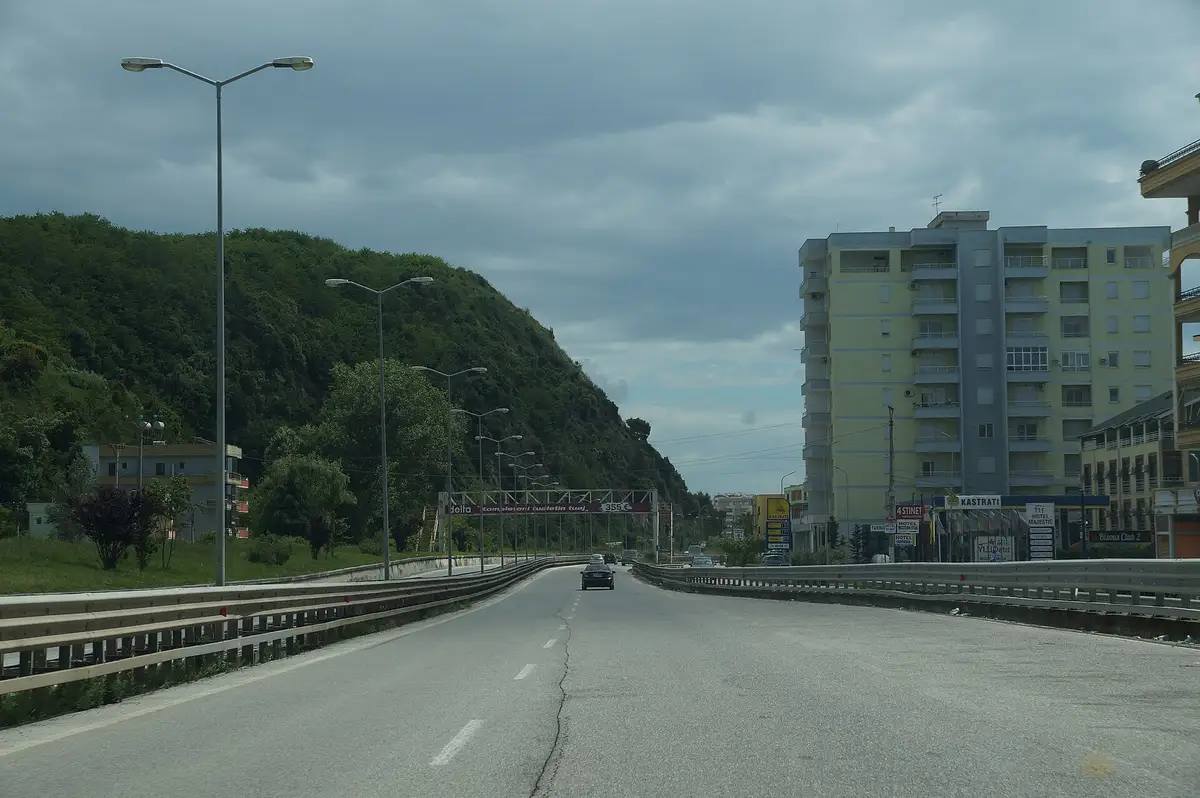
Albania is a small country whose roads change character every hundred kilometres. You start on the three-lane motorway out of Tirana towards Durrës and two hours later you are on a two-lane mountain road with no barrier, meeting a minibus halfway round a blind bend. None of it is difficult. It just helps to know it is coming.
Speed limits
The road code sets four limits by road type:
- 40 km/h in built-up areas
- 80 km/h on secondary and local interurban roads
- 90 km/h on main interurban roads
- up to 130 km/h on the motorway, after the April 2023 amendments to the road code
On the ground the sign wins, not the list. Plenty of roads that look like motorway are posted at 90 or 110, and the limit drops to 40 the moment you reach the first house of a village — often with nothing else about the road changing. Fixed cameras are rare; the traffic police's mobile radar is everywhere, particularly on the approaches to towns and along the Fier–Tepelenë stretch.
If you are fined, paying within 15 days halves it. On a rental the fine reaches the owner first and you second, usually with an admin fee on top, so settling it on the spot is cheaper than letting it travel.
Alcohol: effectively zero
The limit is 0.01% (0.1 g/l), which in practice means none. One glass of wine with lunch puts you over. Breath tests are common at night on the roads out of Tirana and along the coast in summer. The rule needs no interpretation: if you drink, you do not drive.
Lights, belts and children
- Dipped headlights stay on at all times, including midday in full sun. It is one of the easiest fines to collect and the easiest to avoid.
- Seatbelts are compulsory in every seat, back ones included. This is not something you negotiate at the roadside.
- Children under 1.5 m travel in the back, in a restraint suited to their age and weight. Only someone over 1.5 m may sit in front.
- Holding a phone while driving is illegal. A phone holder costs two euro and saves you the fine.
What the roads are actually like
The main arteries — Tirana–Durrës, Tirana–Elbasan, Fier–Gjirokastër, the Rruga e Kombit — are good asphalt and move quickly. The care starts when you leave them.
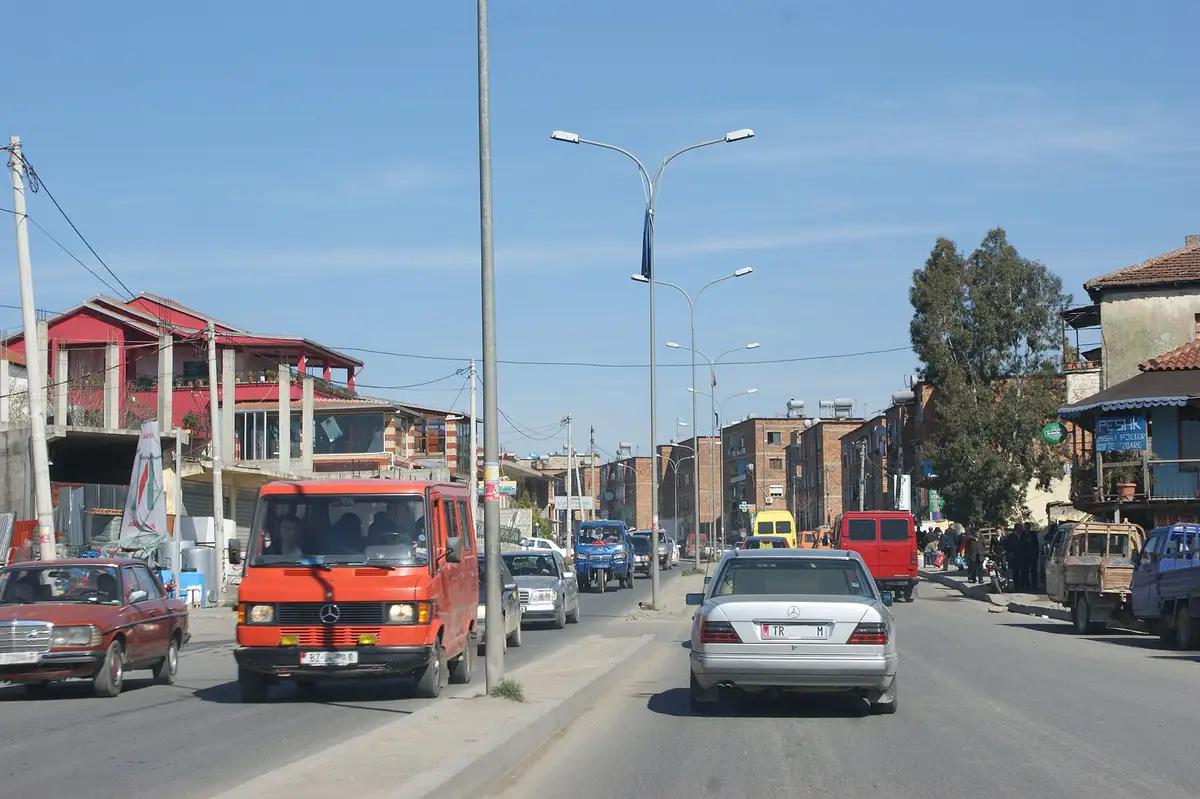
Three things catch foreign drivers out: cars pulling out of side lanes without stopping at all, overtaking into blind bends, and motorbikes running without lights after dark. In the countryside add cattle and horses on the asphalt at dusk. Double your following distance, keep off the horn, and do not be in a hurry — that covers most of it.
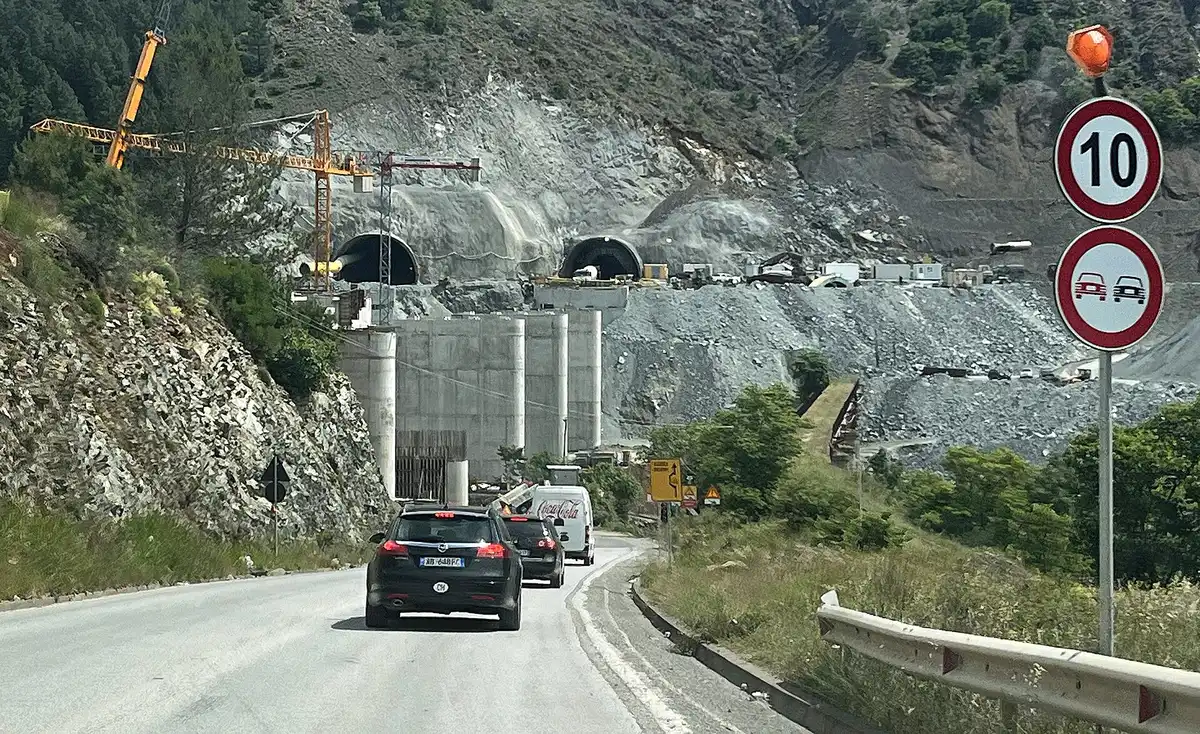
At night, outside towns, there is essentially no street lighting and many mountain roads have no barrier. If you have the choice, do the long legs in daylight.
Fuel
Prices are set weekly by the government's transparency board and are near-identical from north to south. In early August 2026 diesel was 226 lek a litre, petrol 206 lek and LPG 103 lek.
Stations are dense along the main routes and most take cards. On the mountain roads — Theth, Valbona, Kurbnesh — you can go a hundred kilometres without seeing one. Fill up before you climb and keep some cash in lek for the ones that are card-shy.
Parking in Tirana
In the centre, parking is paid from 07:30 to 20:00. Blue road markings mean paid, white means free. The tariff depends on the zone: roughly 100 lek an hour on the most central streets and about 40 lek further out, with day rates in some squares.
Around Blloku and Skanderbeg Square there is effectively nothing free after six in the evening. If you are staying a few hours, the underground car parks beneath the shopping centres are the painless option — and often cheaper overall than two tickets.
Numbers worth having in your phone
- 112 — the single European emergency number
- 129 — police
- 127 — ambulance
- 128 — fire service
- 126 — traffic police
After any accident with damage, a police report is what the insurance runs on. Do not move the car before the police arrive unless it is blocking the road, photograph everything from several angles, and message the owner while you are still at the scene.
Frequently asked questions
Are there toll roads in Albania?
Two of them. The Rruga e Kombit is tolled at the Kalimash tunnel on the way to Kosovo — about 5 euro for a car — and the Llogara tunnel costs around 250 lek. Everything else is free.
Do I need an SUV?
Not for the cities, the coast or the main routes — a small car is enough and far easier to park. An SUV only earns its keep if you plan to leave the asphalt, and even then you need to check whether the owner permits it.
How safe is driving at night?
Fine inside towns. Outside them there is no lighting, pedestrians and animals carry nothing reflective, and mountain bends arrive without warning. Plan the long drives for daylight where you can.